
VISITOR STATISTICS
JURNAL MANAJEMEN PENDIDIKAN
Vol 13, No 1 (2025): Jurnal Manajemen Pendidikan
Jurnal Manajemen Pendidikan, Volume 13, Number 01 2025
Jurnal Manajemen Pendidikan : Scientific Journal of Education is a peer-reviewed scientific open access, with e-ISSN 2614-3313 and p-ISSN 2302-0296 published by Universitas Pakuan, Indonesia
Jurnal Manajemen Pendidikan has built Organization and Editorial team to publish scientific paper.
Jurnal Manajemen Pendidikan : Scientific Journal of Education is a peer-reviewed scientific open access, with e-ISSN 2614-3313 and p-ISSN 2302-0296 published by Universitas Pakuan, Indonesia
Jurnal Manajemen Pendidikan has built Organization and Editorial team to publish scientific paper.
Articles
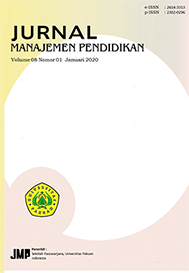
Jurnal Manajemen Pendidikan is a journal that publishes scientific papers in the field of educational administration and educational management. This Journal, was first online published in 2018 by Universitas Pakuan, Bogor. The Journal provides opportunities for scholars to submit papers in educational management and educational administration, and also management policies related to education, teaching, and learning fields which will be published online. The internet connection will add to the richness of information and scientific knowledge derived mainly from research.
This journal is published two times a year, well documented in the form of books, which include a variety of educational management and educational administration papers by writers of various backgrounds. In addition, we also have partners from local editor who graduated as profesor from some university who will review each article before publication. Each article or paper published in this Journal will definitely be useful to all visitors and readers.
Articles submitted to this journal will be reviewed by reviewers before publication by double blind-review. e-ISSN 2614-3313 and p-ISSN 2302-0296

All articles published in JURNAL MANAJEMEN PENDIDIKAN has been indexed in:
 |  |  |  |  |
 |  |  |  |